

 A CARE program · Self-defense & emotional resilience
Stronger than you believed.
Body & Mind uses the body to reach the mind — a self-defense program built so the person with the fewest tools and the greatest exposure to risk can get out of danger alive, and know they can.
Physical techniques are a gateway. They open the door to the emotional dimension of empowerment.
Body & Mind develops resilience in risk situations, where the priority is protecting our own lives and the lives of the people we love. Through training, participants learn to name their emotions, process them, and build both personal and community resilience.
It rests on one premise: most risk situations can be resolved without physical contact — through posture, voice, and attitude. Self-defense here is not about winning a fight. It is about survival, and getting out of the danger zone.
It is designed for the weakest link in the chain — not the boxer or the experienced instructor, but the person with the fewest tools and the greatest exposure. The benchmark is “the grandmother,” not the professional fighter. Everything taught adapts to any body, regardless of strength or experience.

We don't teach classical music. We teach jazz.
Unlike martial arts or combat sports, Body & Mind doesn't teach techniques aimed at winning fights. It adapts to the body's natural reactions under stress, and values getting out alive over technical perfection.
Plays what is written.
Memorize the response to situation X. When the situation isn't X — and under adrenaline it never quite is — the script fails.
Internalize, then improvise.
Graduates don't memorize what to do. They know what to look for in any situation, and from there the body leads.
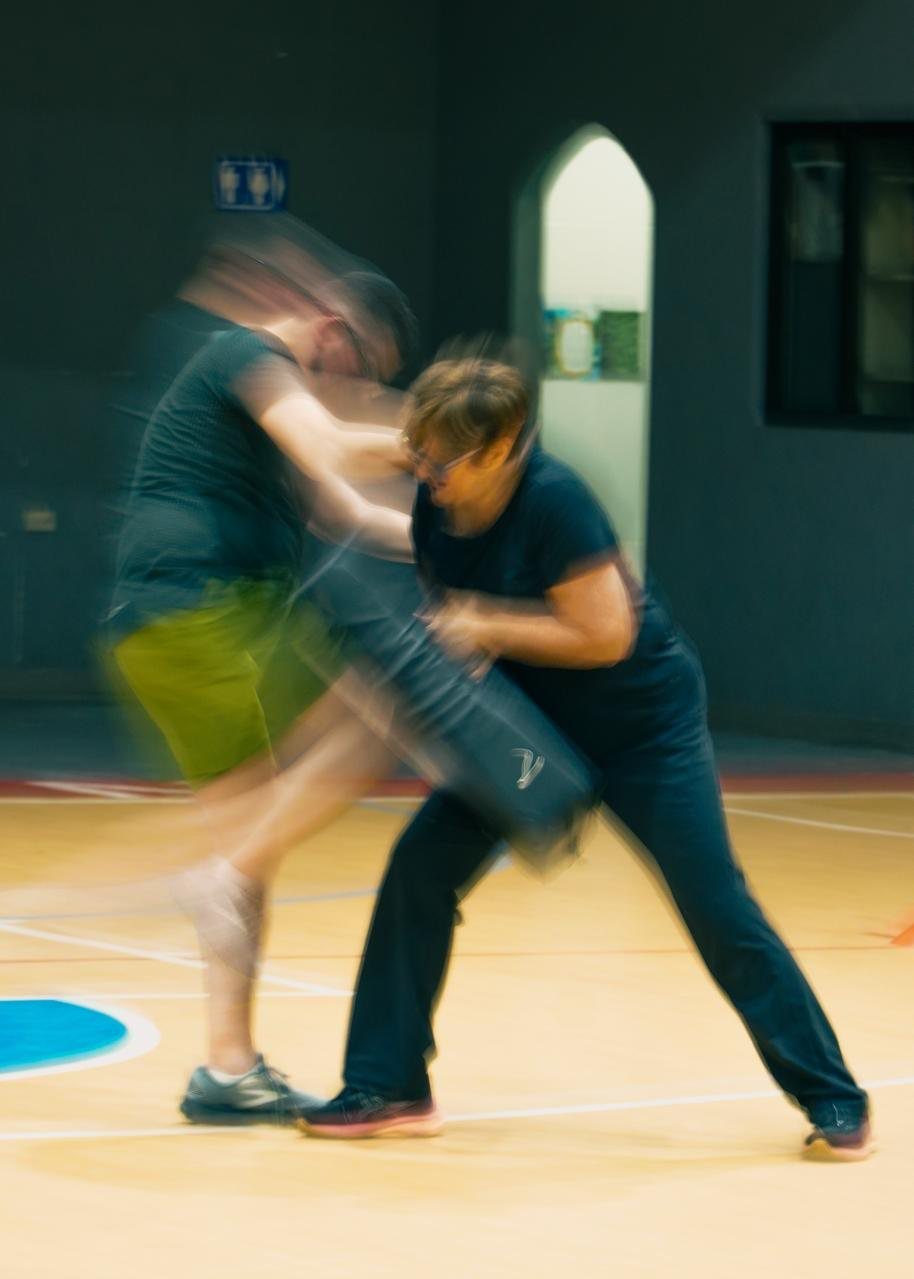
Train the principles until the body leads.
Twelve sessions don't build a fighter. They build someone who can read a moment, decide, and move — even when the heart rate passes 175 beats per minute and fine control is gone.
Resilience is a skill — and it can be trained.
Resilience is the ability to function, adapt, and grow in the face of challenge, stress, or threat. It is not innate. Body & Mind builds it deliberately across three dimensions.
Personal
A sense of self-efficacy — the belief that your actions affect outcomes. Every session is designed so that every participant, whatever their background, experiences genuine success.
Bandura, 1977Psycho-physical
The ability to regulate body and mind simultaneously under stress — moving out of a freeze state and into action.
Porges, 2011 · Levine, 2010Community
The ability to act together and protect one another. Communities that rehearse a shared response recover three to four times faster after a crisis.
Pfefferbaum et al., 2008The 70 · 20 · 10 structure.
Every session integrates three components, mapped onto experiential learning. It moves from simple to complex — voice and posture first, which resolve roughly 90% of problems, and only then physical technique. Each session ends with participants “sweaty and smiling.”
Whatever the situation, the sequence is the same.
Rather than memorizing a response for every scenario, participants learn one simple, repeatable sequence — so the next step is always clear, even under stress.
Awareness
Notice early and resolve the situation before it begins.
Voice & posture
Set a clear boundary and de-escalate — the tools that resolve most situations.
Protect
If needed, simple, effective actions that work regardless of size or strength.
Space
Create distance.
Disengage
Leave the situation and get to safety and help.
The program teaches only simple, whole-body movements the body can rely on under stress — when the heart rate spikes and fine coordination becomes difficult. Detailed technical curriculum is shared with institutions after contact.
What lasts isn't the technique. It's the self-efficacy.
Research distinguishes two kinds of knowledge: procedural (motor execution), which fades without constant practice, and schematic (internalized principles), which is far more durable and transfers to new situations. What remains after twelve sessions is the knowledge that the principles work, and the ability to read a situation and decide what to look for. Those don't fade like motor skills — and a refresher is faster and more focused than in a technique-based program.
Anderson, 1982 · Klein, 1999
Each technique is a response to a problem the last one couldn't solve.
The program builds progressively, each stage adding to the last. The full technical syllabus is shared with institutions after contact; this is the high-level overview.
Avoid & de-escalate
- Disconnection (disengage)
Create reaction & distance
- Palm strikes
- Eyes
- Knee strike
- Front kick
- Hammerfist
- Elbow strike
Defend incoming attacks
- 360° external defense
- Internal defense
- Arrow
Close-quarters & ground
- Grabs & headlocks
- Unexpected grabs
- Technical fall & recovery
- Ground fighting
Real-world & advanced
- Everyday environments
- Protecting a group
- Advanced scenarios
- Shared with institutions
“The jazz.”
Scenario exercises where participants activate everything they've learned under unpredictable conditions — the body leading, in real time, with whatever arises.
Proof through the body, not through words.
Each session pairs its emotional theme with a hands-on exercise that makes a point undeniable. A few from the exercise bank:
Straw through a potato
A flimsy straw pierces a raw potato when you trap the air inside it. The straw didn't change — the technique did. The limit is in the mind before it is in the body.
The unbendable arm
Change the belief, change the body.
The heavy body
Locked is a feeling, not a fact.
Body under weight
The panic is the problem, not the weight.
Two fingers lift a person
Coordinated, several people lift one with two fingers each. A prepared community is a network of people who know their role.
The push that changes direction
Analysis speeds you up — it doesn't slow you down.
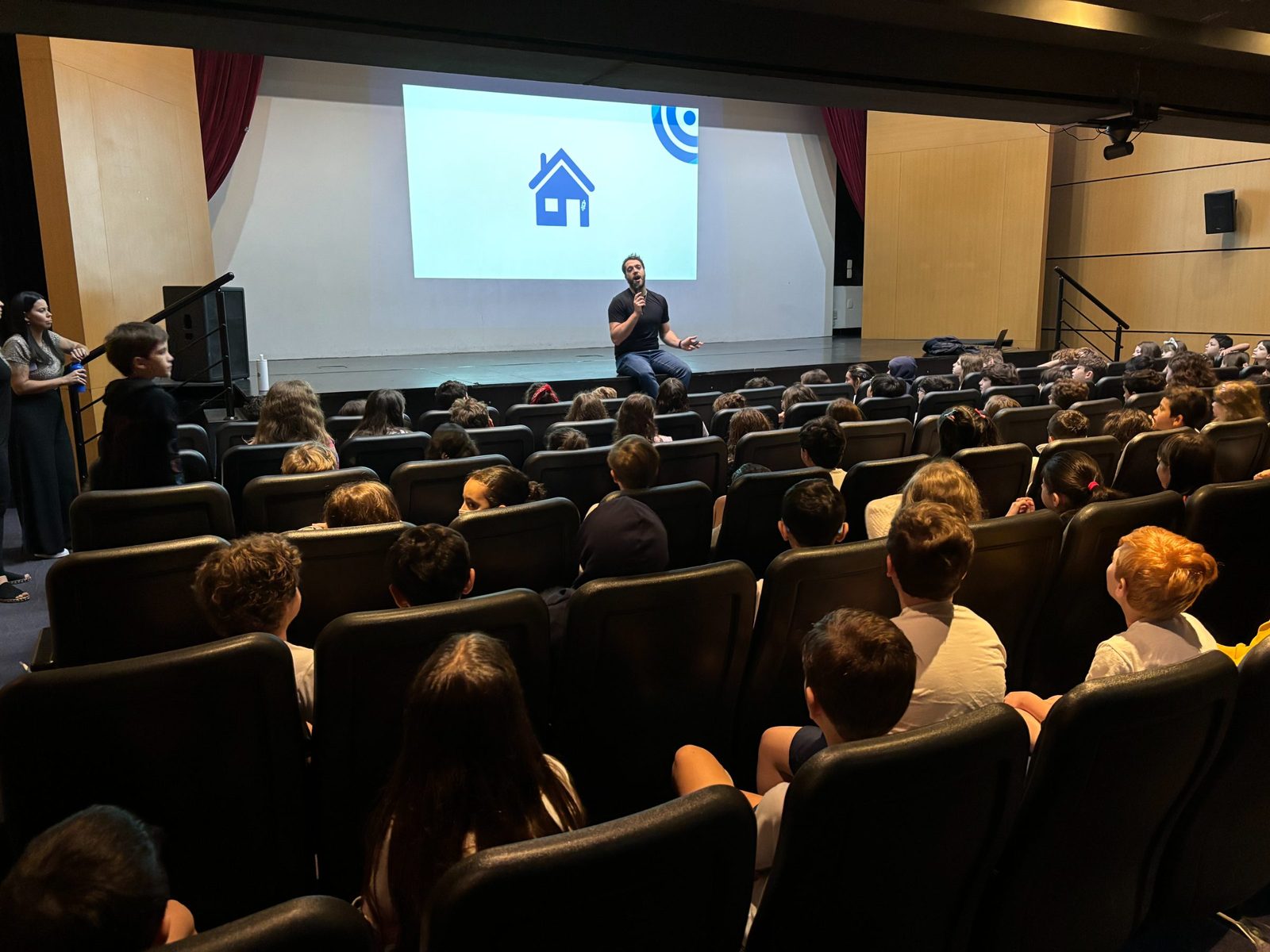
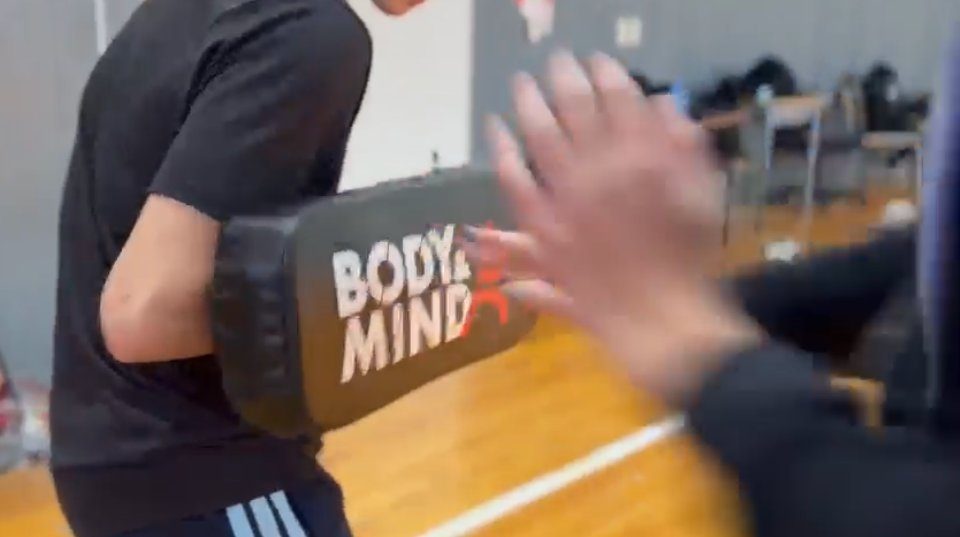
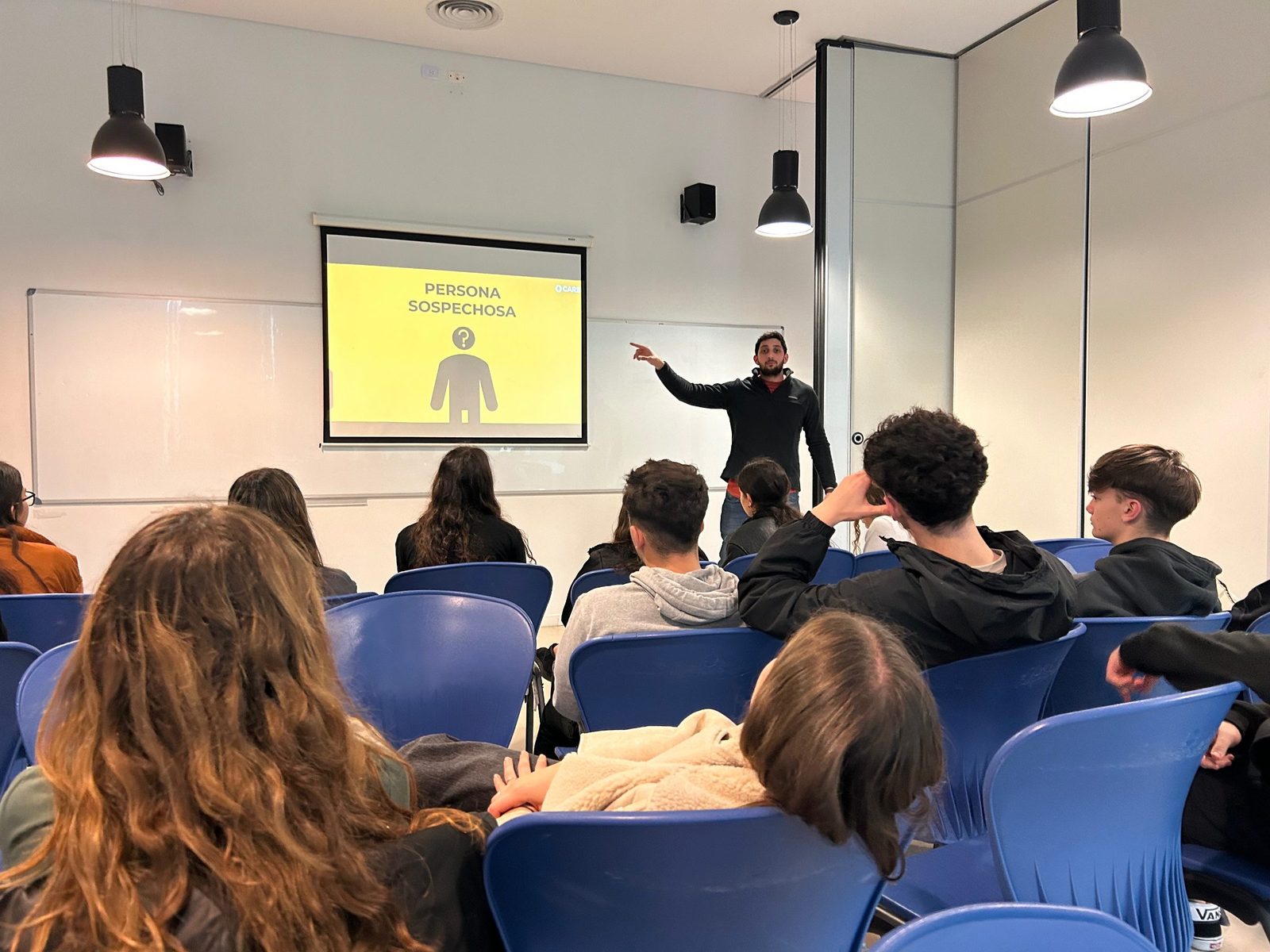
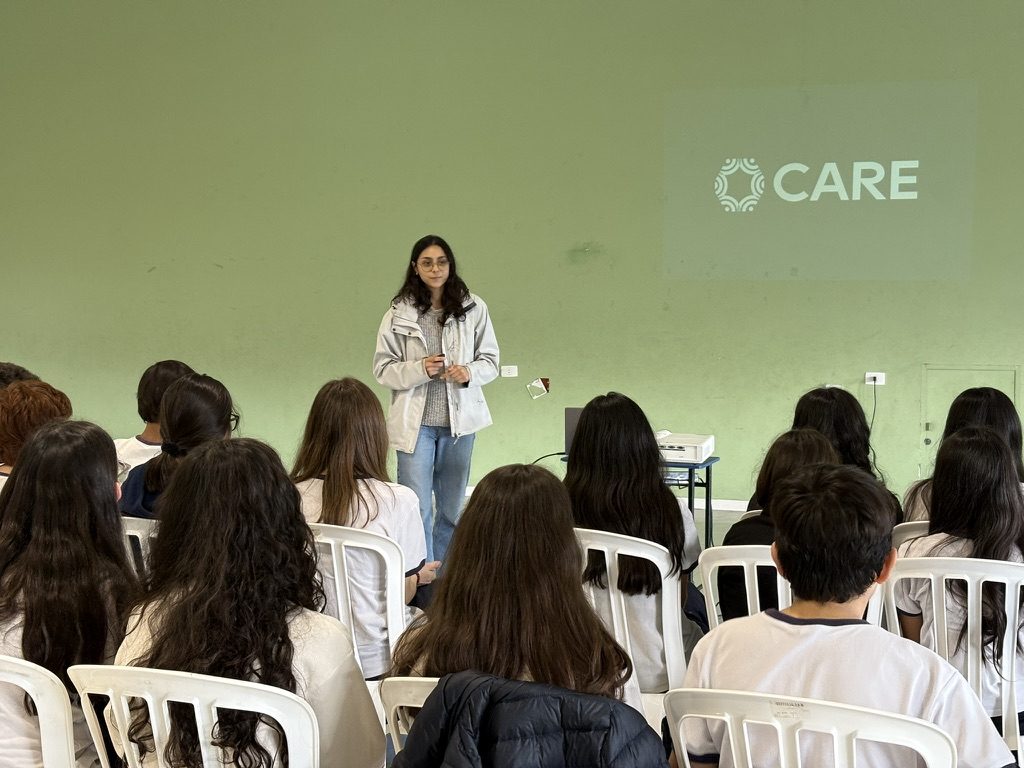
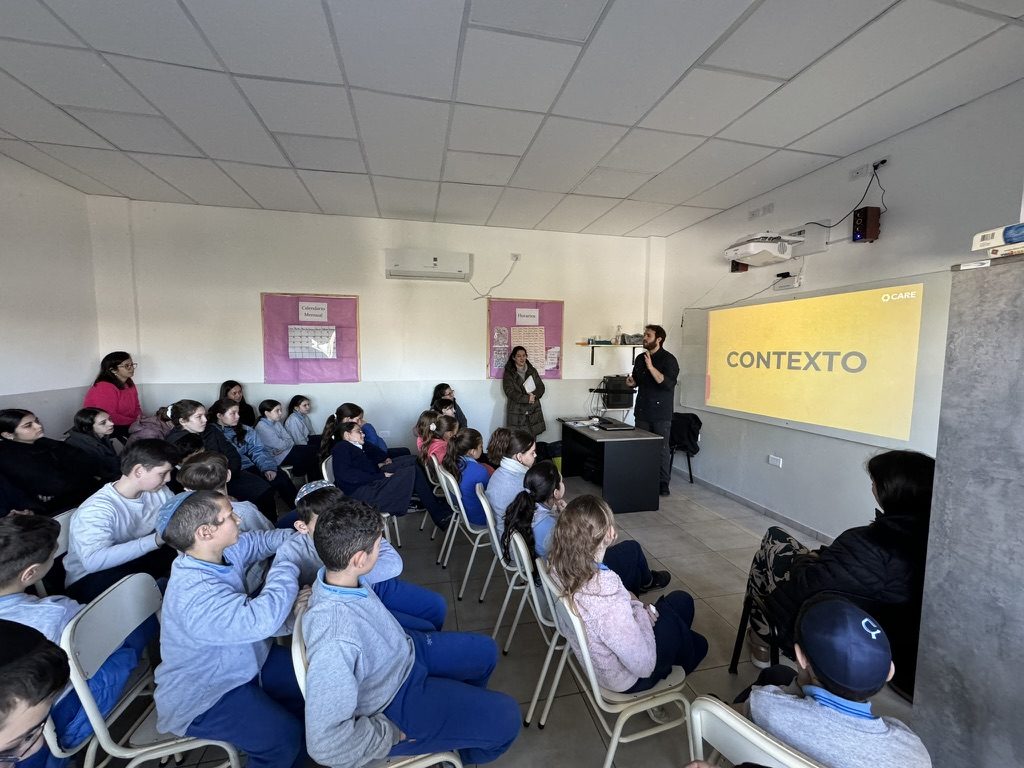
The same approach, in two very different rooms.
The full program
The complete 12-session program — progressive skills, realistic scenarios and emotional resilience, adapted to the group. A dedicated track supports women's classes.
- Confidence and capability for any body, regardless of strength.
- Techniques that rely on method, not physical size.
- Emotional regulation that keeps capability available under stress.
Anti-bullying
For elementary school, no offensive techniques — no kicks, no strikes. The only tools are pushing to create distance, disengaging, using the voice as a clear boundary, and strengthening self-image. “Disconnection” means finding a teacher or trusted adult.
A child who can stand, breathe, and say “no” with confidence — who can walk away without shame — becomes less of a target. Not because they are stronger, but because they look less like one.
A child is not a small adult.
Instruction is redesigned, not scaled down — built around how children actually think, move, and pay attention.
Built on adaptation, not limitation. Telling an ADHD child to “just focus” is, neurologically, like telling a child with a broken arm to “just lift.” We meet the nervous system where it is.
90% play, 10% talk
Children are driven by enjoyment, not rankings. Explanations stay clear and brief.
Everyone wins
Single-winner dynamics are avoided. Teamwork and camaraderie come first.
Concrete, not abstract
Ages 7–11 think concretely — tangible demonstrations and imaginative framing (samurai, ninjas, animals) beat metaphor and logic.
Short bursts
Classes build from calm to higher intensity, structured like the motivational loops of a video game.
Inclusion · ADHD, DCD, ASD / Asperger
Quick-reference methods for the conditions most common in community settings: structure as scaffolding, one instruction at a time, immediate positive reinforcement, movement before cognitive demands.
Control the frame, not the content.
The reflective dialogue is what turns physical training into resilience. The facilitator doesn't control what surfaces in the room — they control the frame within which it surfaces. When the frame is solid, the content can be unpredictable.
- What is said in this room stays in this room.
- There is no correct answer. There is only what is true for you.
- You are not required to speak. You are always welcome to.
Already in classrooms, gyms, and communities.
From elementary assemblies to adult training floors, Body & Mind is delivered where people actually are — schools, institutions, and community settings.
Bring Body & Mind to your community.
Tell us about your school, institution, or group, and we'll shape a program around your people, your spaces, and the ages in the room.